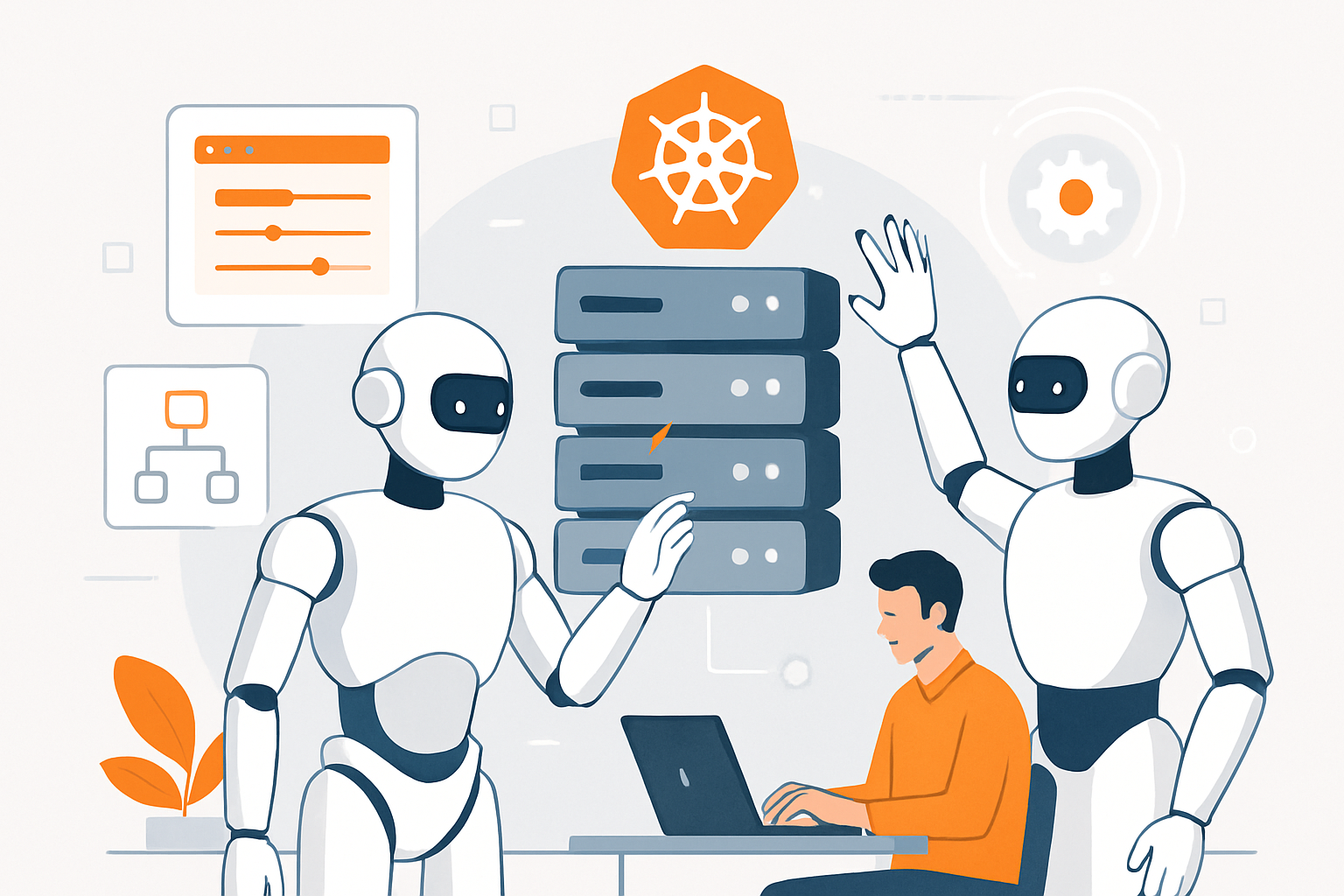
Optimizing AI Agents for Cost-Effective DevOps: Lessons from Multiverse's 438B Model

Introduction
In the rapidly evolving digital landscape, small and medium-sized businesses (SMBs) are increasingly adopting AI-driven solutions to enhance their operations. However, the high costs associated with deploying large AI models can be prohibitive. Enter Multiverse's recent breakthrough: a 438-billion-parameter model optimized for AI agents through innovative compression techniques. This development offers critical insights for SMBs seeking cost-effective DevOps automation, particularly when leveraging Coffield.io's capabilities. In this blog post, we will explore how Multiverse's approach can inform strategies for optimizing AI agents, focusing on token efficiency and performance optimization.
Background/Context
The advent of AI models with billions of parameters marks a significant shift in the capabilities of AI agents. While these models are powerful, they often come with substantial computational and financial costs. Industry pioneers like Multiverse are demonstrating innovative ways to compress these models without sacrificing performance, offering a roadmap for more accessible AI solutions. According to a recent article by The New Stack, Multiverse's model achieves unprecedented speed and efficiency, challenging traditional notions of scalability in AI models. With AI adoption on the rise, understanding these innovations is crucial for SMBs aiming to stay competitive.
Main Problem/Challenge
For SMBs, the core challenge lies in accessing the power of large AI models without incurring unsustainable costs. High token usage and computational demands often lead to inflated budgets, making it difficult for smaller enterprises to fully leverage AI's potential. For example, an SMB might find itself spending more on compute resources than on the actual business innovation the AI was meant to facilitate. Additionally, the complexity of integrating these models into existing DevOps workflows can hinder operational efficiency, rather than enhance it. This is especially problematic for SMBs that rely heavily on agile and lean operations to maintain their competitive edge.
Solution/Approach
The solution lies in adopting a strategic approach to AI model usage, focusing on token efficiency and performance optimization—exactly what Multiverse exemplifies. By compressing their 438B model, Multiverse has shown that it is possible to maintain high performance while significantly reducing the computational load. SMBs can apply similar strategies by:
- Prioritizing Token Efficiency: Use advanced token optimization techniques to reduce the number of tokens processed by the model, thus lowering costs.
- Leveraging AI Native Tools: Implement tools like Coffield.io that offer native support for AI agents, streamlining workflow automation and reducing the overhead associated with large-scale AI model deployment.
- Customizing Model Deployment: Tailor AI models to specific business requirements, ensuring that only the necessary components are actively used, thereby conserving resources.
- Utilizing Compression Techniques: Similar to Multiverse, employ model compression methods to decrease model size without losing accuracy or speed.
Coffield.io Connection
Coffield.io stands at the forefront of enabling SMBs to achieve these optimizations. With its agentic DevOps pipelines, SMBs can seamlessly integrate AI agents, reducing deployment complexity and costs. Features like LLM token cost reduction and SaaS stack consolidation allow businesses to transition from costly SaaS applications to a more streamlined, AI-driven approach. By automating workflows and providing custom dashboards, Coffield.io not only enhances operational efficiency but also delivers measurable ROI.
Real-World Application
Consider a mid-sized e-commerce company that uses Coffield.io to integrate AI agents into its customer service operations. By optimizing token usage and automating routine responses, the company reduces its operational costs by 30% within the first quarter. The custom dashboards provided by Coffield.io enable the company to monitor performance in real time, adjusting strategies as needed to maximize efficiency.
FAQ Section
Q1: How can SMBs ensure their AI models are cost-effective? A1: By focusing on token efficiency, using compression techniques, and deploying AI models that are tailored to specific business needs, SMBs can significantly reduce costs.
Q2: What role does Coffield.io play in optimizing AI deployment? A2: Coffield.io provides tools for seamless integration of AI agents, automating workflows, and offering analytics for strategic decision-making, all while reducing token costs.
Q3: Are there any risks associated with model compression? A3: While model compression can reduce costs and improve efficiency, it's crucial to maintain a balance to ensure that model performance and accuracy are not compromised.
Q4: How do AI native tools differ from traditional SaaS applications? A4: AI native tools, like those provided by Coffield.io, are specifically designed to optimize AI workflows, offering greater flexibility and reduced costs compared to traditional SaaS applications.
Conclusion with CTA
Optimizing AI agents for cost-effective DevOps is not just a possibility but a necessity for SMBs looking to thrive in today’s competitive market. By adopting strategies exemplified by Multiverse and leveraging Coffield.io's innovative solutions, businesses can achieve significant cost reductions while enhancing operational efficiency. To explore how Coffield.io can transform your DevOps processes, Schedule a Demo today.