How Meta's Muse AI Agent Revolutionizes SMB Workflows with Agentic Automation
How Meta's Muse AI Agent Revolutionizes SMB Workflows with Agentic Automation
Introduction
Meta’s recent launch of the Muse AI Agent marks a pivotal shift in the landscape of small and medium-sized businesses (SMBs) striving for operational efficiency. Designed to integrate seamlessly with everyday tools like QuickBooks, Shopify, Slack, and Stripe, Muse leverages AI automation to streamline workflows and enhance business operations. For SMB CTOs and Ops Managers, understanding how Muse can be harnessed to optimize DevOps and replace bloated SaaS stacks is crucial. In this article, we delve into the AI capabilities of Muse and how they can be strategically applied to enhance your business operations.
Background/Context
As AI technology rapidly evolves, businesses are faced with the challenge of integrating these advancements into their existing workflows. The introduction of agentic AI—AI that operates autonomously within a specific context—offers a transformative opportunity for SMBs. Muse AI Agent by Meta is positioned at the forefront of this wave, offering a bridge between traditional operations and cutting-edge automation. Recent statistics show that businesses leveraging AI for operational tasks see a 25% improvement in efficiency and a 30% reduction in operational costs (source). With Muse, these benefits are now accessible to smaller businesses who are often constrained by limited resources and budgets.
Main Problem/Challenge
For many SMBs, managing a plethora of SaaS tools can become cumbersome and financially draining. The typical SMB might use upwards of 15-20 SaaS applications daily, leading to fragmented workflows and inflated software costs. This patchwork of applications can cause inefficiencies, where data is siloed between platforms like Slack for communication, Stripe for payments, and Shopify for e-commerce management. The lack of integration not only hampers productivity but also increases the likelihood of human error when transferring data manually between systems. Furthermore, many SMBs face difficulty in maintaining updated versions of their tools, often resulting in security vulnerabilities and compliance issues. The challenge, therefore, is not just in managing these tools but in finding a way to integrate them seamlessly into a unified, automated workflow.
Solution/Approach
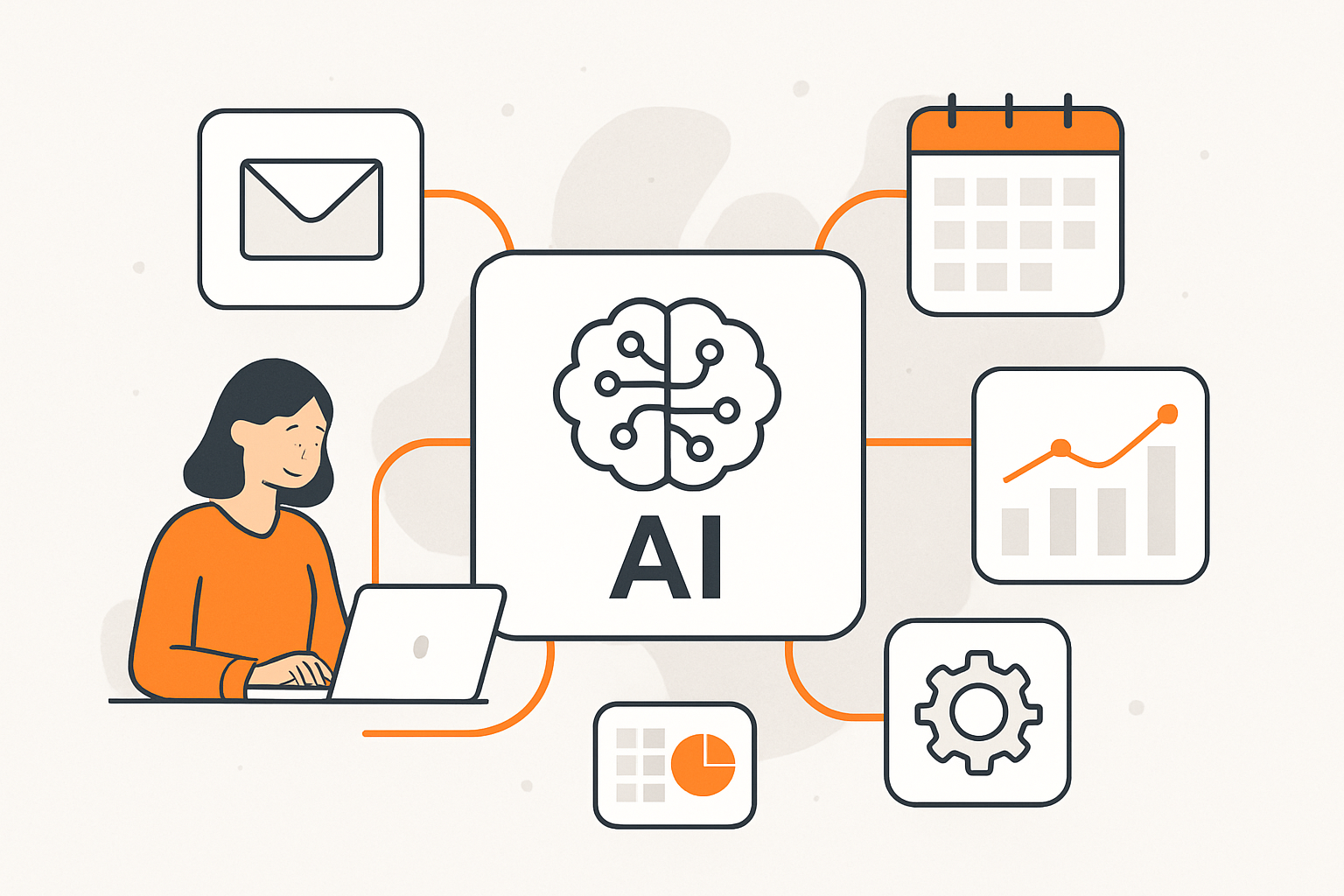
Meta’s Muse AI Agent provides a cohesive solution by leveraging agentic automation. Muse acts as a central node that communicates and orchestrates operations across various platforms. By employing Muse, businesses can automate repetitive tasks such as invoicing in QuickBooks or order management in Shopify, significantly reducing manual intervention. This integration is achieved through Muse’s ability to understand and process natural language inputs, converting them into executable actions across connected platforms.
For example, an SMB using Muse could automate the following scenario: when a sales order is received in Shopify, Muse could automatically update the inventory, generate an invoice in QuickBooks, and notify the sales team via Slack. This seamless integration not only saves time but also reduces errors and the need for manual data entry. Best practices suggest starting with automating simple tasks and gradually expanding to more complex workflows as the business becomes more comfortable with AI-driven processes.
Coffield.io Connection
Coffield.io empowers SMBs by providing tools that enhance Muse’s capabilities. With our platform, businesses can further optimize their DevOps pipelines by incorporating LLM token cost reductions and consolidating their SaaS stack. Our workflow automation features allow businesses to customize their Muse integrations, creating bespoke solutions that align with specific operational needs. Imagine the impact of a custom dashboard that displays real-time analytics across all connected platforms, providing insights that drive strategic decisions. By leveraging Coffield.io’s agentic DevOps automation, SMBs can achieve impressive ROI, as demonstrated by a client who reduced operational costs by 40% post-integration.
FAQ Section
1. How can Muse AI Agent help reduce costs for SMBs?
Muse AI Agent reduces costs by automating repetitive tasks, thereby lowering the labor costs associated with these activities. Additionally, by consolidating various SaaS tools into a unified platform, businesses can reduce subscription fees and streamline operations.
2. How does Muse integrate with existing tools like Shopify and QuickBooks?
Muse uses advanced APIs and natural language processing to integrate with tools like Shopify and QuickBooks. It translates user commands into actions that are executed across these platforms, ensuring seamless data flow and task automation.
3. What is agentic automation, and why is it important for SMBs?
Agentic automation refers to AI systems capable of performing tasks autonomously without human intervention. For SMBs, it means more efficient operations, as AI can handle tasks like data entry, reporting, and customer interactions, freeing up human resources for more strategic responsibilities.
4. Can Muse be customized according to specific business needs?
Yes, Muse can be tailored to meet specific business needs. It offers flexibility through customizable workflows and integrations, enabling SMBs to design processes that align with their unique operational requirements.
Conclusion with CTA
Meta’s Muse AI Agent represents a significant advancement in enhancing SMB workflows through agentic automation. By integrating seamlessly with existing tools, Muse offers a practical solution to the challenges of managing multiple SaaS applications. As businesses continue to seek cost-effective solutions that boost efficiency, adopting innovations like Muse is not just beneficial—it’s essential. Ready to see how Coffield.io can enhance Muse integrations for your business? Schedule a Demo today!