How Kubernetes’ Monolith Lesson Shapes AI Agentic DevOps for SMBs
Introduction
In the rapidly evolving world of technology, small and medium-sized businesses (SMBs) are constantly seeking ways to optimize their operations and maximize efficiency. As AI-driven solutions become more prevalent, the lessons learned from Kubernetes' shift from a monolithic architecture to a more flexible and scalable model offer invaluable insights for deploying AI agents in DevOps. Understanding these lessons is particularly crucial now, as SMBs increasingly adopt AI-driven DevOps solutions to enhance their operations and stay competitive.
In this article, we will explore how the architectural evolution of Kubernetes informs the deployment and optimization of AI agents in DevOps. By understanding these principles, SMBs can achieve more efficient and scalable automation solutions, helping them capitalize on the benefits of AI technology.
Background/Context Section
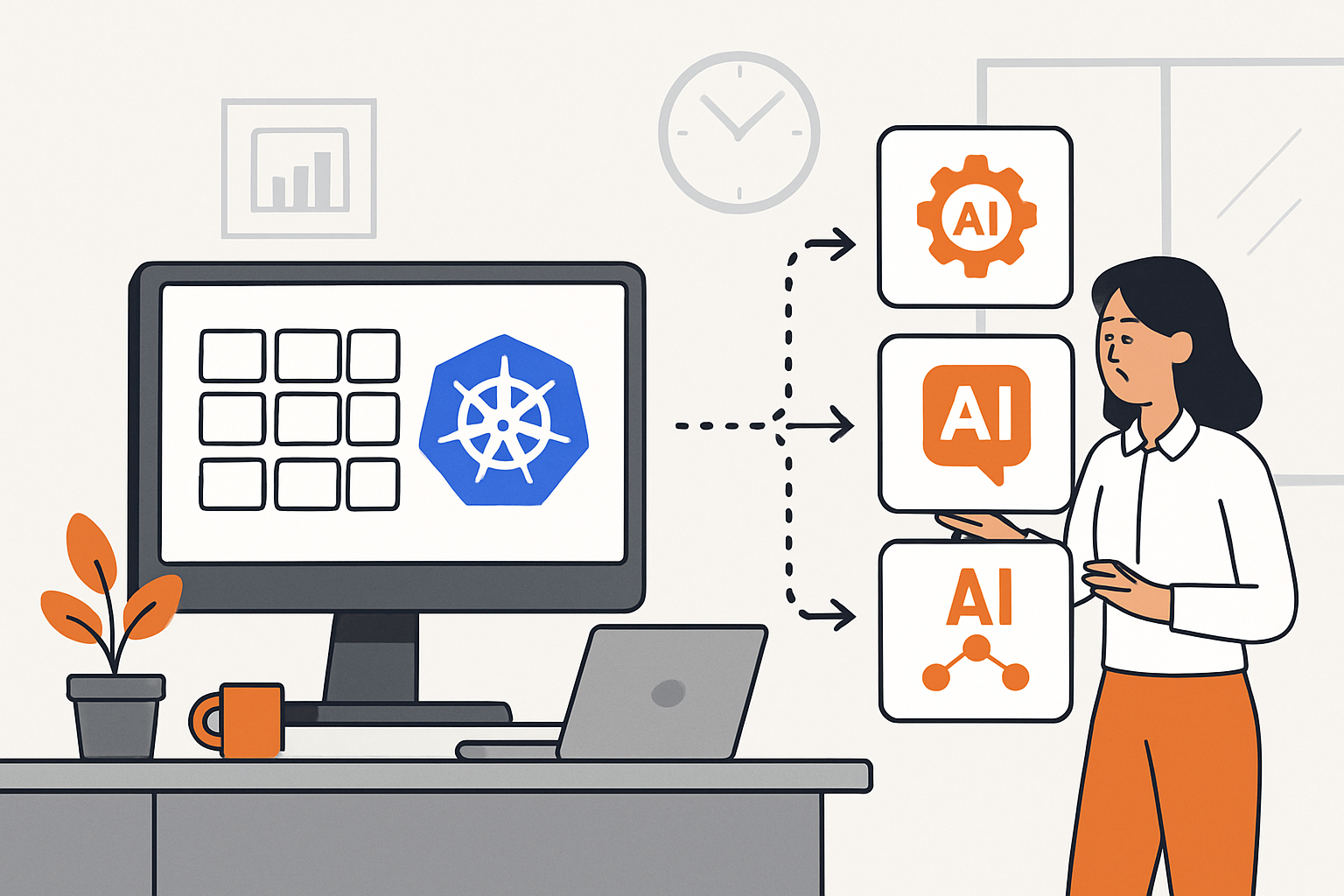
Kubernetes has long been a cornerstone of modern cloud-native architecture. Originally designed as a monolithic system, Kubernetes faced significant challenges related to scalability, flexibility, and resource management. Over time, it evolved to embrace a more modular and microservices-oriented architecture, enabling greater adaptability and efficiency.
This shift was driven by the need to handle increasing workloads and the desire to provide a more tailored solution for different user demands. By breaking down its monolithic structure, Kubernetes could offer more scalable and flexible solutions, which are essential for today’s dynamic business environments. As SMBs increasingly rely on AI to future-proof their operations, these lessons become crucial.
According to The New Stack, the transition to a microservices architecture has been instrumental in enabling Kubernetes to meet the diverse needs of its users, making it a model for other technologies aiming to enhance their scalability and operational efficiency (The New Stack).
Main Problem/Challenge Section
For SMBs, the main challenge in adopting AI-driven DevOps solutions lies in managing the complexity and scalability of AI deployments. Without a proper framework, AI agents can quickly become unwieldy, leading to inefficiencies and increased costs. Common pain points include:
- Lack of scalability: SMBs often struggle to scale their AI solutions effectively, resulting in performance bottlenecks and resource constraints.
- Complex deployment processes: Implementing AI agents can be complex and time-consuming, especially for organizations with limited technical expertise.
- Resource management issues: Inefficient resource allocation can lead to increased costs and suboptimal performance of AI-driven workflows.
These challenges can hinder the ability of SMBs to fully leverage AI in their DevOps processes, thus limiting their potential for growth and innovation.
Solution/Approach Section
To address these challenges, SMBs can learn from Kubernetes’ architectural evolution. Here are some strategies that can help:
Modular Architecture
Adopting a modular approach allows businesses to break down AI applications into smaller, more manageable components. This facilitates easier updates, testing, and deployment, leading to more efficient AI development and integration.
Scalable Infrastructure
Leveraging cloud-native technologies and microservices architecture enables SMBs to scale their AI applications seamlessly, ensuring that they can handle varying workloads without compromising performance.
Automated Resource Management
Implementing AI-driven resource management tools can optimize the allocation and utilization of resources, reducing operational costs and enhancing efficiency. These tools can automatically adjust resource allocation based on real-time demands, ensuring optimal performance.
Best Practices
- Implement continuous integration/continuous delivery (CI/CD): This ensures that AI updates and improvements are deployed swiftly and efficiently.
- Utilize container orchestration platforms: Platforms like Kubernetes can help manage and automate the deployment, scaling, and management of containerized applications, making it easier to handle AI workloads.
- Focus on observability: Implement monitoring and logging solutions to gain insights into the performance of AI agents, allowing for timely interventions and optimizations.
Coffield.io Connection
Coffield.io provides SMBs with a platform to streamline their agentic DevOps processes, leveraging the lessons learned from Kubernetes' evolution. Here’s how:
- Agentic DevOps Pipelines: Coffield.io simplifies the deployment of AI agents by providing pre-built pipelines that integrate seamlessly with existing DevOps workflows.
- LLM Token Cost Reduction: By optimizing token usage, Coffield.io helps businesses reduce costs associated with large language models, ensuring that AI applications remain cost-effective.
- SaaS Stack Consolidation: Our platform allows SMBs to replace costly SaaS tools with AI-native solutions, reducing overhead and improving ROI.
- Workflow Automation: With Coffield.io, businesses can automate repetitive tasks, enhancing productivity and allowing teams to focus on more strategic initiatives.
By leveraging Coffield.io's capabilities, SMBs can achieve a more efficient and scalable DevOps environment, enabling them to capitalize on the benefits of AI technology. To see how Coffield.io can transform your business, Schedule a Demo today.
FAQ Section
What are the benefits of adopting a modular architecture in AI deployments?
Modular architecture allows SMBs to break down complex AI applications into smaller components, making them easier to manage, update, and deploy. This approach enhances scalability and flexibility, crucial for adapting to changing business needs.
How can Coffield.io help reduce AI deployment costs?
Coffield.io offers solutions that optimize token usage in large language models, reducing costs associated with AI deployments. Additionally, by consolidating SaaS tools, businesses can lower their overhead and improve their ROI.
Why is resource management important in AI-driven DevOps?
Efficient resource management ensures that AI applications can perform optimally without incurring unnecessary costs. By automating resource allocation, businesses can enhance performance and reduce operational expenses.
How does Coffield.io enhance workflow automation?
Coffield.io provides tools to automate repetitive tasks, streamlining workflows and boosting productivity. This allows teams to focus on strategic initiatives, driving innovation and growth.
What makes Kubernetes a model for AI-driven DevOps?
Kubernetes’ shift from a monolithic to a microservices architecture showcases the benefits of modularity, scalability, and flexibility, serving as a model for AI-driven DevOps solutions that require efficient and adaptable infrastructure.
Conclusion with CTA
In conclusion, the lessons learned from Kubernetes' architectural evolution provide valuable insights for SMBs looking to optimize their AI-driven DevOps solutions. By adopting a modular approach, leveraging scalable infrastructure, and automating resource management, businesses can achieve greater efficiency and scalability.
For SMBs ready to enhance their operations with AI-driven DevOps solutions, Coffield.io offers a comprehensive platform that addresses these needs. Schedule a Demo to learn more about how we can help your business thrive in the digital age.