How AI Agents Are Transforming Back Office Operations: Lessons from SAP's Autonomous Enterprise
Introduction
In the quest for operational excellence, the back office—often the backbone of any business—is undergoing a radical transformation. SAP's recent strides towards an "Autonomous Enterprise" by integrating AI agents into back office operations underscore a pivotal shift that SMBs cannot afford to ignore. With SAP's announcement fresh on the horizon, there's a heightened interest in how AI-driven processes can enhance operational efficiency and reduce overhead. This post delves into the implications of SAP's advancements and aligns them with Coffield.io's mission to automate internal workflows and business operations for SMBs.
Background/Context Section
The evolution towards an autonomous enterprise, as championed by SAP, represents a broader industry shift towards AI integration in business operations. At the heart of this transformation is the deployment of AI agents to streamline tasks such as data entry, customer service, and inventory management. According to The New Stack, SAP envisions a landscape where errors are minimized, and efficiency is maximized, setting a new standard for operational excellence.
Statistics reveal that companies embracing AI technologies can increase productivity by up to 40%, significantly impacting the bottom line. This shift is not just about technology but also about culture—redefining how businesses think about automation and efficiency.
Main Problem/Challenge Section
For SMBs, the challenge lies in adopting these cutting-edge technologies without disrupting existing operations. The lack of room for error, as highlighted by SAP's approach, resonates with many small to medium-sized businesses. Common pain points include limited resources, budget constraints, and the fear of technology adoption leading to job displacement.
Consider a small accounting firm struggling with manual data entry and reconciliations. The time-consuming nature of these tasks can lead to errors and missed deadlines. Similarly, a retail business might find it challenging to maintain accurate inventory counts without an automated system, affecting customer satisfaction and sales.
Solution/Approach Section
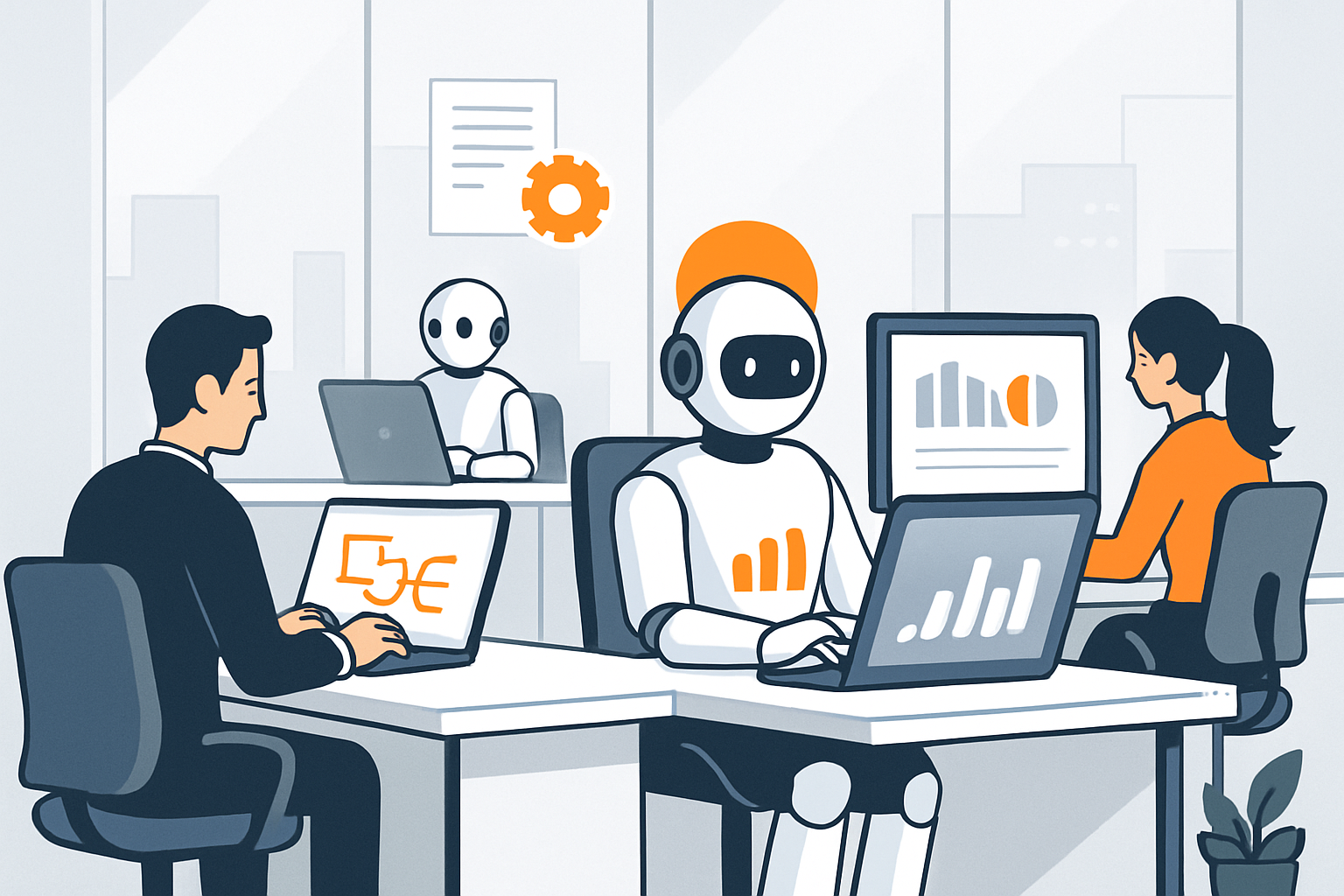
The solution lies in strategically implementing AI agents to handle repetitive and error-prone tasks. AI agents can automate data entry, reduce errors in inventory management, and enhance customer service through chatbots. This approach not only frees up human resources for more strategic tasks but also improves overall operational efficiency.
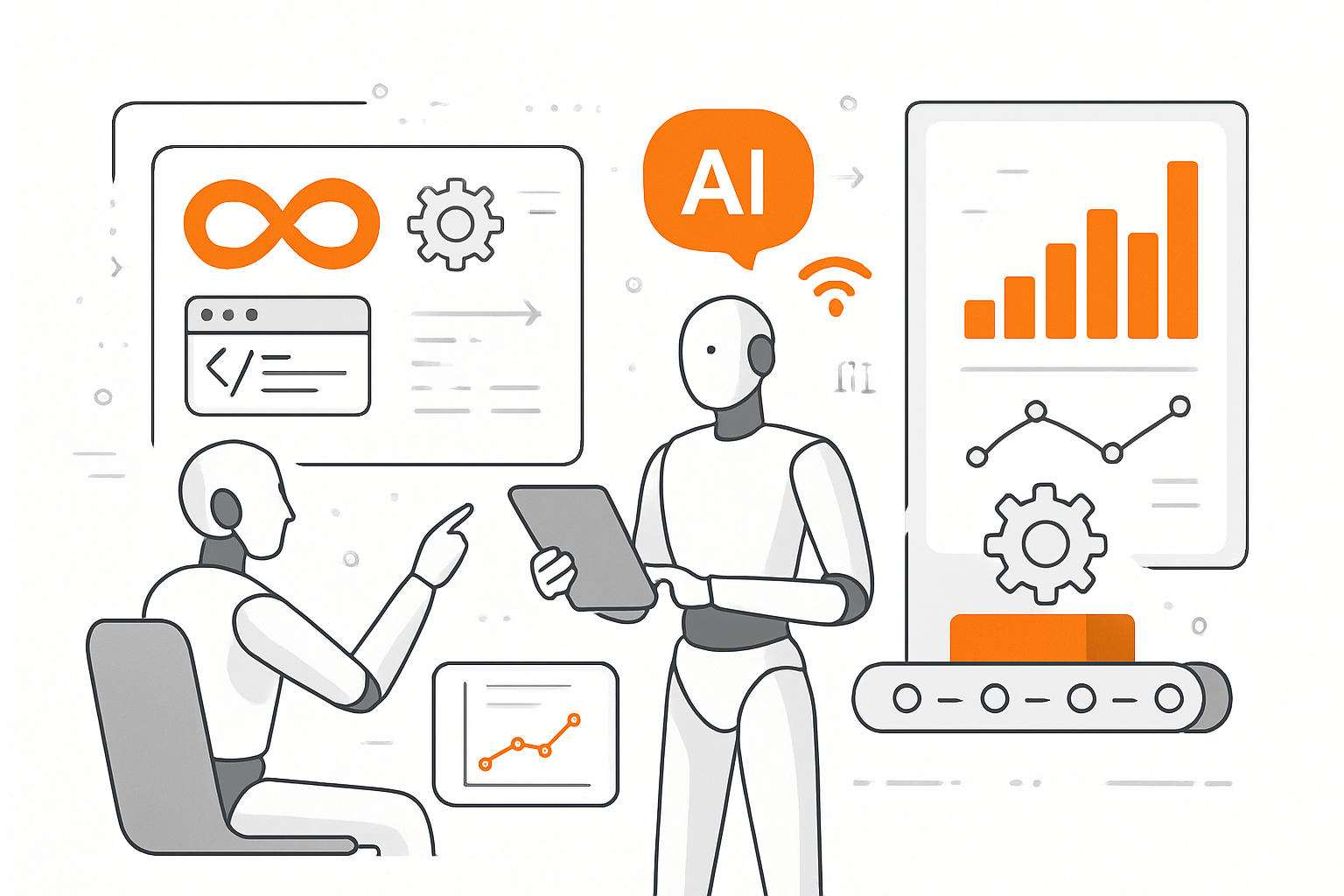
To implement an AI-driven transformation, businesses should start by identifying the most time-consuming and error-prone tasks. Once identified, integrating AI solutions like Coffield.io can automate these processes. For instance, using agentic DevOps pipelines, businesses can streamline their CI/CD workflows, reducing manual intervention and increasing deployment speed.
Best practices include conducting a thorough needs assessment, starting with a pilot program, and scaling based on feedback and results. This phased approach ensures minimal disruption and maximizes ROI.
Coffield.io Connection
Coffield.io offers SMBs the tools to automate workflows, reduce SaaS stack costs, and optimize operations through AI-native solutions. Our platform's agentic DevOps automation streamlines back office operations, enabling businesses to remain competitive without increasing overhead.
For instance, our LLM token optimization feature reduces costs associated with AI model operations, while our workflow automation tools replace legacy systems with intuitive AI-driven processes. By leveraging Coffield.io, SMBs can achieve real-world operational efficiency and significant ROI improvements.
To see how Coffield.io can transform your business operations, Schedule a Demo today.
FAQ Section
-
What are AI agents, and how do they work in back office operations? AI agents are software programs designed to perform tasks traditionally done by humans. In back office operations, they automate repetitive tasks such as data entry, inventory management, and customer service, increasing efficiency and reducing errors.
-
How can SMBs benefit from implementing AI agents? SMBs can benefit by reducing operational costs, improving accuracy in tasks prone to human error, and freeing up employees for more strategic roles. This leads to enhanced productivity and competitiveness.
-
What is the ROI on AI-driven back office automation? The ROI varies but can be significant. Businesses often see a reduction in operational costs, quicker time-to-market for services, and improved customer satisfaction, leading to higher revenues.
-
How does Coffield.io support SMBs in AI automation? Coffield.io provides tools for workflow automation, agentic DevOps, and LLM token cost reduction. Our platform is designed to integrate easily with existing systems, offering SMBs a seamless transition to AI-driven operations.
-
Is there a risk of job displacement with AI agents? While AI can automate certain tasks, it also creates opportunities for employees to engage in higher-value work. The focus is on enhancing productivity, not replacing jobs.
Conclusion with CTA
The integration of AI agents in back office operations is more than a trend—it's a strategic move towards future-proofing businesses. By leveraging the insights and tools provided by SAP and Coffield.io, SMBs can enhance operational efficiency, reduce costs, and maintain a competitive edge. Ready to transform your business operations? Schedule a Demo with Coffield.io today.