Enhancing SMB DevOps with AI Agents: A Deep Dive into Databricks' Postgres Integration
Enhancing SMB DevOps with AI Agents: A Deep Dive into Databricks' Postgres Integration
Introduction
In an era where technological advancements are rapidly transforming business operations, the integration of AI agents within DevOps processes is a game-changer. Recently, Databricks acquired Electric to enhance its capabilities, providing each AI agent with its own Postgres database. This strategic move underscores a significant trend that SMBs must consider to stay competitive in today’s digital landscape. But why does it matter now?
This acquisition marks a pivotal moment in the evolution of AI agent deployment, particularly for small to medium-sized businesses (SMBs) aiming to optimize their DevOps infrastructure. By understanding and leveraging this trend, SMBs can enhance operational efficiency, reduce costs, and improve overall performance. In this blog post, we’ll explore how integrating dedicated Postgres databases for each AI agent can revolutionize your DevOps strategy, using insights gleaned from Databricks’ recent acquisition.
Background/Context Section
The DevOps landscape is undergoing a transformation driven by the necessity to incorporate AI into routine operations. With AI agents becoming crucial to automating complex tasks, the need for scalable and efficient data management solutions has never been more pressing.
According to industry reports, businesses using AI in their operations see a 15% improvement in efficiency and a 25% increase in profitability. This integration is not just a trend; it’s a strategic necessity. Databricks' recent acquisition of Electric, a startup known for its WASM-based Postgres project PGlite, highlights a growing trend in utilizing specialized databases to support AI-driven processes. This move aims to enhance the capabilities of AI agents by providing them with dedicated data environments, ensuring faster and more accurate data processing.
Statistics reveal that companies that have adopted AI agents for DevOps have managed to reduce their time-to-market by up to 20%, showcasing the tangible benefits of such technological advancements.
Main Problem/Challenge Section
Despite the clear advantages, many SMBs face challenges when integrating AI agents into their DevOps processes. A core issue is the ability to efficiently manage and process the vast amounts of data AI agents require. Without specialized databases, AI agents can become bottlenecks rather than enablers, leading to increased latency and reduced efficiency.
For example, consider an SMB in the e-commerce sector that relies on AI agents for inventory management and customer personalization. Without dedicated databases like Postgres, these AI agents might struggle with data retrieval and processing, resulting in delays and inaccuracies that can affect customer satisfaction and operational efficiency.
Common pain points include:
- Data Overload: AI agents generate and require massive data volumes. Without efficient data management, this can lead to system slowdowns.
- Complex Integration: Integrating AI agents with existing systems can be complex and costly without the right infrastructure.
- Security Concerns: Managing sensitive data in a shared environment without dedicated databases can pose security risks.
Solution/Approach Section
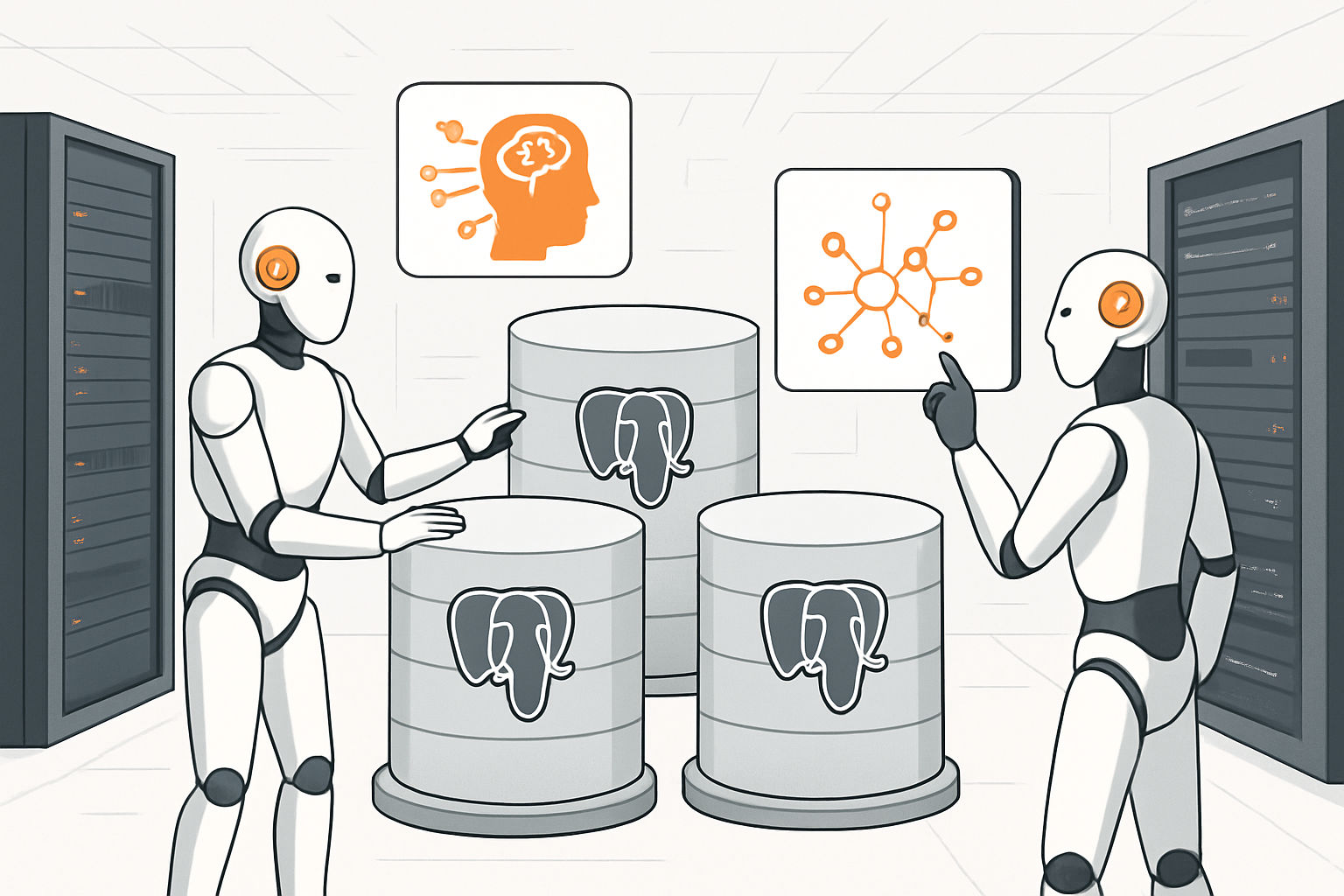
The solution lies in adopting a framework where each AI agent is paired with its own dedicated Postgres database. This approach addresses the core issues by ensuring that AI agents have the necessary resources to operate efficiently.
Step-by-Step Framework
- Assessment: Begin by evaluating your current DevOps environment to identify data management challenges.
- Design: Plan an architecture that incorporates dedicated Postgres databases for each AI agent. This involves mapping out data flows and identifying key integration points.
- Implementation: Deploy the Postgres databases alongside your AI agents. Utilize tools like PGlite to ensure lightweight and efficient database operations.
- Monitoring: Continuously monitor the performance of your AI agents and databases. Implement feedback loops to refine and optimize operations.
- Security: Ensure robust security protocols are in place to protect data within each database.
Best Practices
- Scalability: Design your architecture to scale with your business needs. Postgres databases offer flexibility and scalability, crucial for growing SMBs.
- Automation: Automate database management tasks to reduce manual intervention and potential errors.
- Optimization: Regularly optimize database queries to enhance performance and reduce latency.
Coffield.io Connection
At Coffield.io, we specialize in empowering SMBs to optimize their DevOps processes through automation and intelligent data management. Our platform offers a suite of tools designed to streamline operations, from agentic DevOps pipelines to AI agent dashboards.
Features
- Agentic DevOps Pipelines: Automate deployment processes and reduce human error with intelligent pipelines.
- LLM Token Cost Reduction: Manage and optimize token usage across AI agents to save on operational costs.
- SaaS Stack Consolidation: Replace legacy SaaS tools with integrated AI solutions, enhancing efficiency.
- Workflow Automation: Streamline repetitive tasks, allowing your team to focus on strategic initiatives.
By leveraging these features, SMBs can achieve significant ROI. For example, an SMB utilizing Coffield.io saw a 30% reduction in operational costs after consolidating their SaaS stack and optimizing their AI agent deployments.
FAQ Section
What is the benefit of dedicated databases for AI agents?
Dedicated databases like Postgres enable AI agents to process data more efficiently, reducing latency and improving accuracy. This setup ensures that each agent can access the data it needs without contention, enhancing overall system performance.
How can SMBs integrate AI agents into their existing infrastructure?
Start with a thorough assessment of current systems and identify areas where AI agents can add value. Use frameworks and tools provided by platforms like Coffield.io to streamline integration while ensuring scalability and security.
What challenges might SMBs face when adopting AI agents?
Common challenges include data management, system integration complexity, and security concerns. Address these by implementing dedicated databases and robust security protocols.
How does Coffield.io support AI agent deployment?
Coffield.io offers tools for automating DevOps processes, optimizing AI agent performance, and managing data efficiently. Our platform ensures that AI agents are integrated seamlessly, reducing time-to-market and improving ROI.
Conclusion with CTA
Incorporating AI agents into your DevOps processes with dedicated Postgres databases can revolutionize your operations, enhancing efficiency, and reducing costs. As the trend grows, SMBs must adapt to remain competitive. Explore how Coffield.io can assist in this transformation by scheduling a demo.
Schedule a Demo today and optimize your DevOps strategy for the future.