What Your Logs Can’t Tell You: Enhancing DevOps with Agentic AI
Introduction
In the fast-evolving landscape of DevOps, businesses strive to optimize their continuous integration and continuous deployment (CI/CD) processes. However, traditional logging mechanisms often fall short, leaving critical insights obscured. As businesses increasingly integrate AI-driven solutions, it becomes vital for SMBs to comprehend the limitations of conventional systems like logs and harness the potential of AI agents. This blog post explores how AI agents in DevOps can bridge these gaps, offering enhanced insights and operational efficiencies that traditional logging simply cannot, particularly in areas like CI/CD and incident response automation.
Background/Context Section
The landscape of software development and operations has dramatically shifted over recent years. Traditional logging, once a cornerstone for identifying system performance and troubleshooting issues, has become inadequate for modern complex systems. Logs are typically vast, cumbersome, and often ignored until a failure occurs. With the rise of AI technology, there's a clear shift towards more proactive, insightful operational tools.
According to a report by The New Stack, logs have lived in a liminal space — essential yet often underutilized until necessary (The New Stack). This shift is driven by the need for real-time insights and predictive analytics, something that AI agents are uniquely positioned to deliver. For SMBs looking to stay competitive, embracing these innovations is more crucial now than ever.
Main Problem/Challenge Section
The core issue with traditional logging is its reactive nature. Logs tell us what happened after the fact — they don't provide predictive or real-time insights. Imagine a situation where your CI/CD pipeline fails. With traditional logs, you might spend hours sifting through data to identify the root cause. This delay can be costly and detrimental to business operations.
SMBs often face challenges such as:
- Delayed Incident Response: Logs only provide post-incident insights, leading to longer recovery times.
- Data Overload: The sheer volume of logs can be overwhelming, making it hard to extract actionable insights.
- Resource Intensive: Analyzing logs requires significant manual effort and expertise, resources that many SMBs cannot afford to spare.
Solution/Approach Section
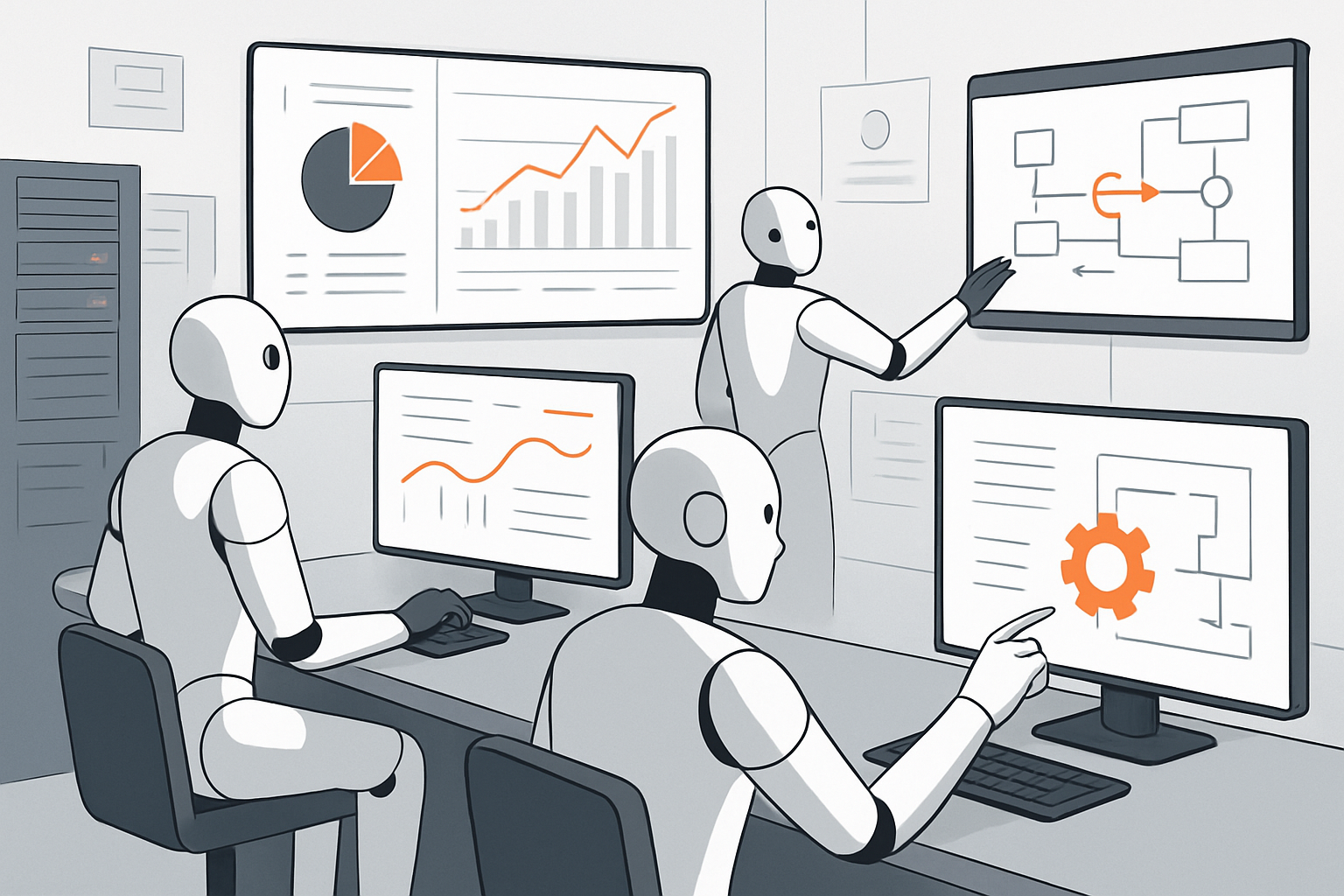
AI agents present a transformative solution by offering real-time monitoring and predictive analytics, which can preemptively identify potential issues. Here's how AI agents enhance DevOps processes:
Real-Time Monitoring
AI agents monitor system operations continuously, providing immediate alerts and suggested actions. For instance, if your deployment pipeline is about to fail due to a configuration error, an AI agent can flag this before deployment, saving time and resources.
Predictive Incident Response
By analyzing patterns and trends, AI agents can predict incidents before they occur. In CI/CD, this means potential failures are spotted early, allowing for corrective measures to be taken proactively.
Efficiency in Data Handling
AI agents can sift through vast amounts of data quickly, extracting meaningful insights without the manual burden traditional logging requires. This results in more efficient processes and quicker decision-making.
Best Practices
To effectively integrate AI agents into your DevOps processes, consider the following best practices:
- Start Small: Begin with a pilot program to monitor specific aspects of your CI/CD pipeline.
- Leverage Prebuilt Models: Utilize existing AI frameworks that can be tailored to your specific needs.
- Continuously Train Your AI Models: Ensure your AI agents adapt to new data and evolving processes.
Coffield.io Connection
At Coffield.io, we recognize the challenges SMBs face with traditional logging systems and offer solutions that integrate agentic AI into your DevOps operations. Our platform facilitates:
- Agentic DevOps Pipelines: Automatically optimize your CI/CD processes using AI-driven insights and automation.
- LLM Token Cost Reduction: Efficiently manage and reduce costs associated with language model processing.
- SaaS Stack Consolidation: Replace redundant tools and streamline operations with our comprehensive AI-native solutions.
- Workflow Automation: Automate routine tasks, allowing your team to focus on strategic initiatives.
By incorporating Coffield.io's solutions, SMBs can achieve significant ROI through enhanced operational efficiency and reduced downtime. Schedule a Demo to see how our platform can transform your DevOps processes today.
FAQ Section
What are the limitations of traditional logging in DevOps?
Traditional logging systems are reactive, meaning they provide insights after problems occur, leading to delays in incident response. They also involve massive data handling, which can be overwhelming without yielding actionable insights.
How can AI agents improve CI/CD processes?
AI agents enhance CI/CD by providing real-time monitoring, predictive analytics, and preemptive incident response. This enables quicker identification and resolution of potential issues, reducing downtime and improving efficiency.
Why should SMBs consider adopting AI agents?
SMBs should consider AI agents to gain competitive operational efficiencies, reduce resource-intensive manual processes, and improve incident response times, which are critical for maintaining business agility.
How does Coffield.io support AI integration in DevOps?
Coffield.io offers tailored solutions for SMBs, including AI-driven DevOps pipelines, cost-efficient language model management, and workflow automation, allowing businesses to streamline operations and enhance productivity.
Conclusion with CTA
In today's fast-paced digital environment, relying solely on traditional logging mechanisms leaves SMBs at a disadvantage. By leveraging AI agents, businesses can enhance their DevOps processes, ensuring more efficient, proactive, and insightful operations. Ready to transform your DevOps with AI? Schedule a Demo with Coffield.io and discover how our platform can drive your business success.