Bridging the AI Perception-Reality Gap: Practical Steps for SMBs

Introduction
In today's rapidly evolving business landscape, artificial intelligence (AI) stands out as a game-changer. Yet, for many small and medium-sized businesses (SMBs), there's a glaring gap between the AI market hype and the tangible benefits they can actually harness. As headlines tout AI as a universal solution capable of replacing traditional tools and transforming industries overnight, SMB operators are left grappling with practical questions: How can AI make my team more effective? Which systems are truly reliable? And most importantly, how do I measure the ROI of AI investments? This blog post aims to demystify these concerns, offering actionable insights on how Coffield.io’s agentic AI can bridge this perception-reality gap, enhance operations, streamline workflows, and offer measurable ROI.
Background/Context
The AI revolution is in full swing, with increasing adoption across sectors. According to recent reports, AI market growth is projected to reach approximately $190 billion by 2025. This growth is fueled by the promise of enhanced efficiency, reduced operational costs, and improved customer experiences. However, as AI technologies rapidly evolve, a disconnect has emerged between the expectations set by tech media and venture capitalists, and the real-world applications that deliver actual value to businesses. A recent article from HubSpot highlights this widening gap, pointing out that many businesses are still struggling to integrate AI in a way that aligns with their operational realities source: HubSpot. This divergence is particularly pronounced among SMBs, who often operate with tighter budgets and fewer resources than their larger counterparts.
Main Problem/Challenge Section
For SMBs, the core challenge lies in navigating the hype and zeroing in on AI solutions that are truly impactful. Many business owners are inundated with marketing messages that paint AI as a silver bullet, capable of completely overhauling operations overnight. However, the reality is far more nuanced. While AI can certainly drive efficiencies, the implementation process requires careful planning and strategic alignment with business goals. Common pain points include:
1. Lack of Clear ROI Metrics
Many SMBs struggle to quantify the returns on their AI investments. Without clear metrics, it's challenging to justify the cost or gauge success.
2. Integration with Existing Systems
Integrating AI seamlessly with existing tools and processes can be daunting, often requiring significant time and technical resources.
3. Human Resource Concerns
There is a prevalent fear that AI might replace human roles, creating resistance among employees who are essential to a company’s success.
These issues underscore the importance of selecting AI solutions that not only address business needs but also integrate smoothly into existing workflows, enhancing rather than disrupting operations.
Solution/Approach Section
To bridge the gap between AI perception and reality, SMBs should adopt a pragmatic approach that focuses on incremental improvements and measurable outcomes. Here’s a step-by-step guide to achieving this:
Step 1: Define Clear Objectives
Before diving into AI, define what success looks like for your business. This could be reducing operational costs, enhancing customer service, or improving product delivery times. Clear objectives guide the selection and implementation of AI tools.
Step 2: Start Small with Pilot Projects
Test AI technologies through small-scale pilot projects. This approach minimizes risk and provides tangible data on the technology's impact, allowing for adjustments before wider deployment.
Step 3: Evaluate Integration Compatibility
Choose AI solutions that easily integrate with your current systems. This ensures a smoother transition and leverages existing data and processes without requiring a complete overhaul.
Step 4: Focus on Augmentation, Not Replacement
Position AI as a tool that complements human capabilities, rather than replacing them. This approach fosters employee buy-in and maximizes the benefits derived from both AI and human expertise.
Step 5: Measure and Iterate
Continuously measure AI's impact against set objectives, using clear, quantifiable metrics. Use this data to refine processes, scale successful implementations, and make informed decisions about further AI investments.
Coffield.io Connection
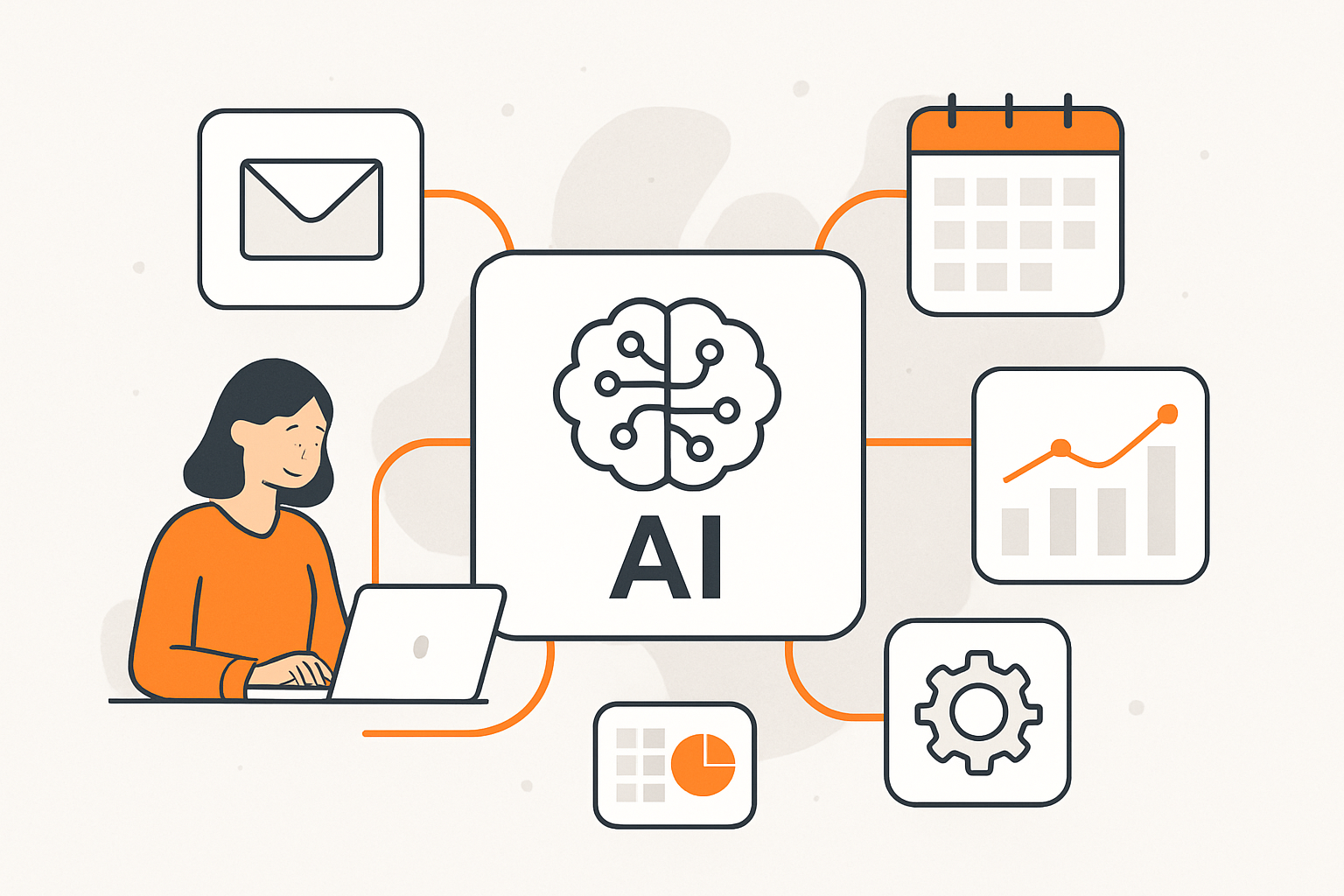
Coffield.io is uniquely positioned to address the AI perception-reality gap for SMBs. Our platform offers a suite of tools designed to enhance operations and deliver measurable results. Here's how:
Agentic DevOps Pipelines
Our agentic DevOps pipelines automate routine tasks, freeing up human resources for more strategic work. This not only increases efficiency but also enhances team productivity.
LLM Token Cost Reduction
By optimizing large language model (LLM) token usage, Coffield.io helps SMBs significantly reduce costs associated with AI implementation, offering a better ROI.
Workflow Automation and AI Agents
Coffield.io's AI agents streamline workflows, ensuring that tasks are completed more quickly and accurately, without the risk of human error. This automation leads to improved operational efficiency and enhanced service delivery.
Real-world Application and ROI
Consider the case of a mid-sized retail company that used Coffield.io to automate its inventory management system. By integrating our AI tools, the company reduced stock discrepancies by 30% and cut labor costs by 25%, illustrating a clear and measurable ROI. Schedule a Demo to see how Coffield.io can transform your business operations.
FAQ Section
What is the biggest misconception about AI for SMBs?
The biggest misconception is that AI will immediately replace existing systems and roles. In reality, AI is most effective when integrated as a complementary tool that enhances human capabilities and existing processes.
How can SMBs measure AI's ROI?
Start by defining specific, quantifiable objectives such as reduced costs, improved customer satisfaction, or increased sales. Use these metrics to measure the performance and impact of AI implementations.
Is AI suitable for all SMBs?
While AI offers significant advantages, its suitability depends on the specific needs and readiness of the business. SMBs should evaluate their objectives and current infrastructure to determine the right AI approach.
How does Coffield.io ensure seamless AI integration?
Coffield.io focuses on compatibility and ease of integration, offering tools that work with existing systems to enhance, rather than disrupt, operations. Our platform ensures that AI implementations are streamlined and effective.
Conclusion with CTA
Navigating the AI perception-reality gap requires a strategic approach focused on achieving tangible business outcomes. SMBs can leverage AI to enhance operations and drive efficiency by selecting tools that align with clear goals and easily integrate into existing workflows. Coffield.io stands ready to help SMBs realize these benefits. Schedule a Demo to explore how our solutions can transform your business.