Why AWS Wants Developers to Stop Babysitting Their AI Agents: Implications for SMB DevOps
Introduction
In the rapidly evolving world of DevOps, the continuous management of AI agents has become a significant point of interest for small and medium-sized businesses (SMBs). Recently, Amazon Web Services (AWS) introduced a groundbreaking development with Kiro Crew, aiming to minimize the need for constant oversight of AI agents. This initiative is poised to significantly streamline DevOps processes for SMBs, offering a powerful tool in the quest for operational efficiency and reduced bottlenecks.
As SMBs increasingly integrate AI-driven DevOps strategies, understanding how to effectively manage AI agents without intensive oversight is crucial. In this article, we will explore the implications of AWS's advancements for SMBs, particularly how Coffield.io's agentic automation solutions can further enhance these benefits.
Background/Context Section
The introduction of AWS's Kiro Crew marks a pivotal shift in the DevOps landscape. Originally launched in 2025 as part of AWS's Kiro, this agentic, spec-driven development environment quickly garnered attention for its potential to reduce the administrative weight on developers. By August, the Kiro Crew was introduced, offering enhanced functionalities that allow AI agents to operate with greater autonomy and efficiency.
The need for reduced oversight comes as AI agents become more complex, yet indispensable for many business operations. According to recent industry reports, over 60% of SMBs have integrated some form of AI into their workflows. However, these integrations have often required significant human resources to monitor and manage, creating a bottleneck in the agile methodologies that DevOps prides itself on.
This development is particularly vital as the market for AI in DevOps is projected to grow by over 30% annually, highlighting the increasing reliance on AI-driven processes and the necessity for innovative solutions to manage them efficiently.
Main Problem/Challenge Section
One of the primary challenges faced by SMBs in adopting AI-driven DevOps is the need for constant oversight of AI agents. This oversight often requires dedicated resources, which can strain the limited manpower and budgets typical of SMBs. In many cases, businesses have to assign personnel to continuously monitor AI agent performance, ensuring they operate within acceptable parameters and respond appropriately to unexpected scenarios.
For instance, consider an SMB in the e-commerce sector using AI agents to manage order processing and customer interactions. These AI agents must continually be checked for errors, inconsistencies, and performance metrics, a task that can detract from more strategic initiatives. Furthermore, the potential for costly errors increases significantly if these agents are not adequately supervised, leading to operational disruptions and customer dissatisfaction.
Another common pain point is the complexity of integrating AI agents into existing DevOps pipelines. Many SMBs struggle with compatibility issues, data silos, and the inefficiencies of managing multiple SaaS tools, each with their unique management dashboards and protocols. This complexity can lead to increased operational costs and reduced ROI from AI investments.
Solution/Approach Section
AWS's Kiro Crew offers a compelling solution by enhancing AI agent autonomy, thereby reducing the need for constant human oversight. At the heart of this solution is the agentic, spec-driven framework, which enables AI agents to learn from past interactions and make informed decisions without continuous human input.
For SMBs, this translates into a more streamlined DevOps process where AI agents can autonomously monitor and adjust their operations based on pre-defined parameters and historical data. This not only reduces the manpower required for oversight but also enhances the reliability and efficiency of AI-driven applications.
To implement this solution effectively, SMBs can follow a step-by-step approach:
- Adopt Kiro Crew's Framework: Begin by integrating Kiro Crew's spec-driven environment into existing systems, focusing on areas where AI agent oversight is most intensive.
- Define Operational Parameters: Establish clear operational boundaries and decision-making protocols for AI agents, leveraging the spec-driven capabilities of Kiro Crew.
- Monitor and Optimize: Continuously monitor the performance of AI agents using Kiro Crew's tools to identify areas for optimization and improved efficiency.
- Leverage AI for Continuous Improvement: Utilize AI-driven insights to refine DevOps processes further, ensuring that AI agents adapt to changing business needs over time.
Coffield.io Connection
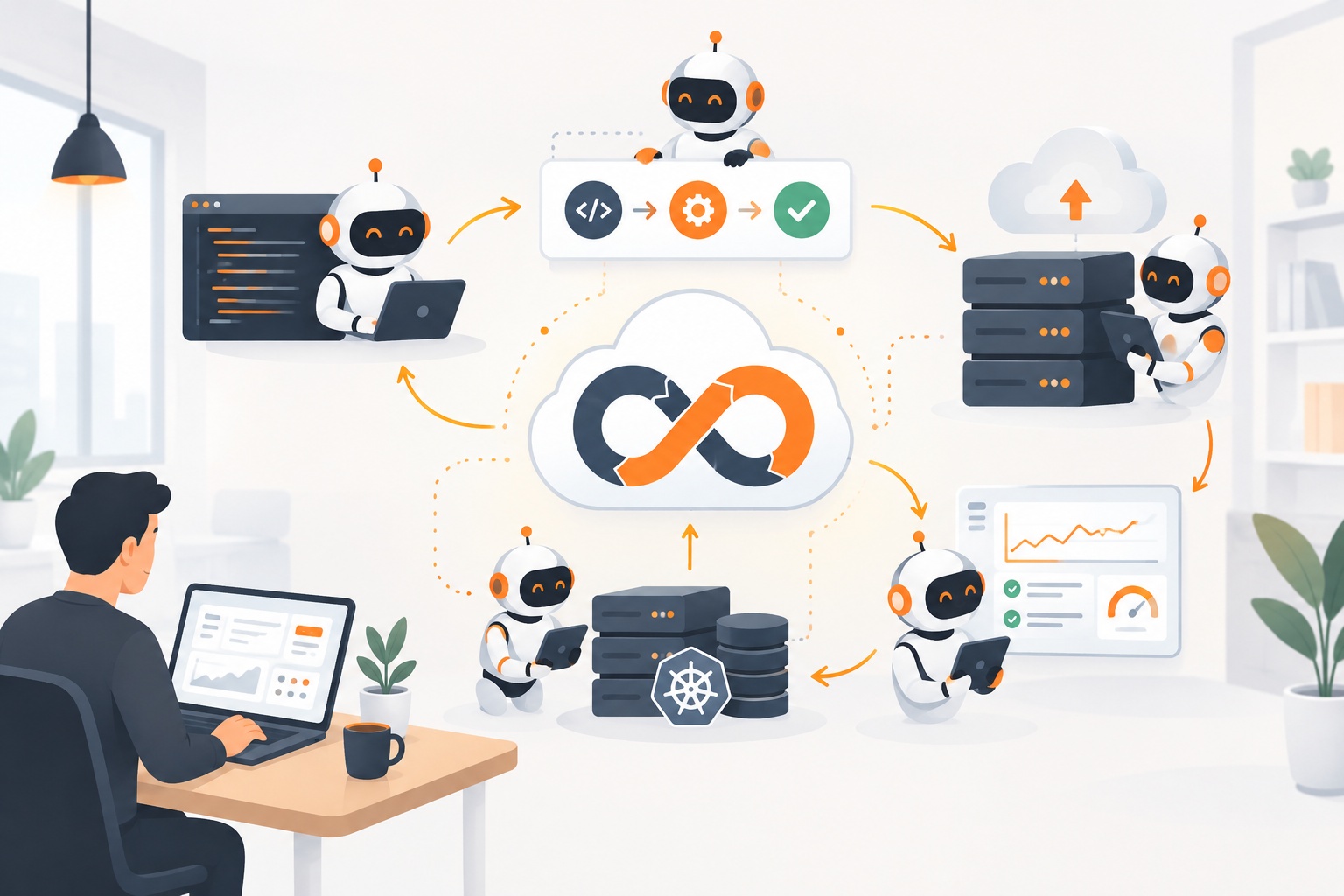
Coffield.io provides the ideal platform for SMBs looking to capitalize on these advancements by offering solutions that integrate seamlessly with AWS's Kiro Crew. Our agentic DevOps pipelines allow businesses to automate workflows, reduce the number of SaaS tools required, and optimize AI agent performance through custom dashboards and LLM token cost reduction.
For instance, by using Coffield.io's workflow automation capabilities, SMBs can automate repetitive tasks typically managed by AI agents, freeing up resources for strategic initiatives. Moreover, our platform's ability to consolidate SaaS stacks into a single, cohesive system ensures that SMBs can maintain effective oversight without the complexity of managing multiple disparate tools.
The ROI for SMBs adopting Coffield.io in conjunction with AWS's Kiro Crew is significant, as businesses can expect reductions in operational costs and improvements in process efficiency, leading to enhanced competitiveness and market agility.
Schedule a Demo to see how Coffield.io can transform your SMB's DevOps operations.
FAQ Section
What is Kiro Crew and how does it benefit SMBs?
Kiro Crew is an extension of AWS's Kiro, designed to reduce the need for constant oversight of AI agents by enabling them to operate autonomously. This benefits SMBs by freeing up resources and enhancing operational efficiency.
How can Coffield.io enhance the use of AI agents within DevOps?
Coffield.io enhances AI agent use through its agentic DevOps pipelines, which automate workflows and optimize performance, reducing the need for multiple SaaS tools and providing custom dashboards for easy oversight.
What are the key features of Coffield.io that support SMB DevOps?
Key features include agentic automation solutions, LLM token cost management, SaaS stack consolidation, and comprehensive workflow automation—all designed to streamline and enhance SMB DevOps operations.
How does reducing AI agent oversight improve ROI for SMBs?
By reducing oversight, SMBs can allocate resources more effectively, lower operational costs, and improve process efficiency, leading to a significant return on investment.
What should SMBs focus on when implementing AI-driven DevOps strategies?
SMBs should focus on integrating AI agents with existing systems, defining clear operational parameters, and using continuous monitoring to optimize and improve DevOps processes over time.
Conclusion with CTA
The advancements made by AWS with Kiro Crew represent a transformative opportunity for SMBs to streamline their DevOps processes and reduce operational burdens. By leveraging Coffield.io's agentic automation solutions, businesses can maximize these benefits, achieving greater efficiency and a robust ROI.
Schedule a Demo today to explore how Coffield.io can enhance your AI-driven DevOps strategies.