Leveraging Docusign's AI Workflow Lessons to Elevate Agentic DevOps for SMBs
Introduction
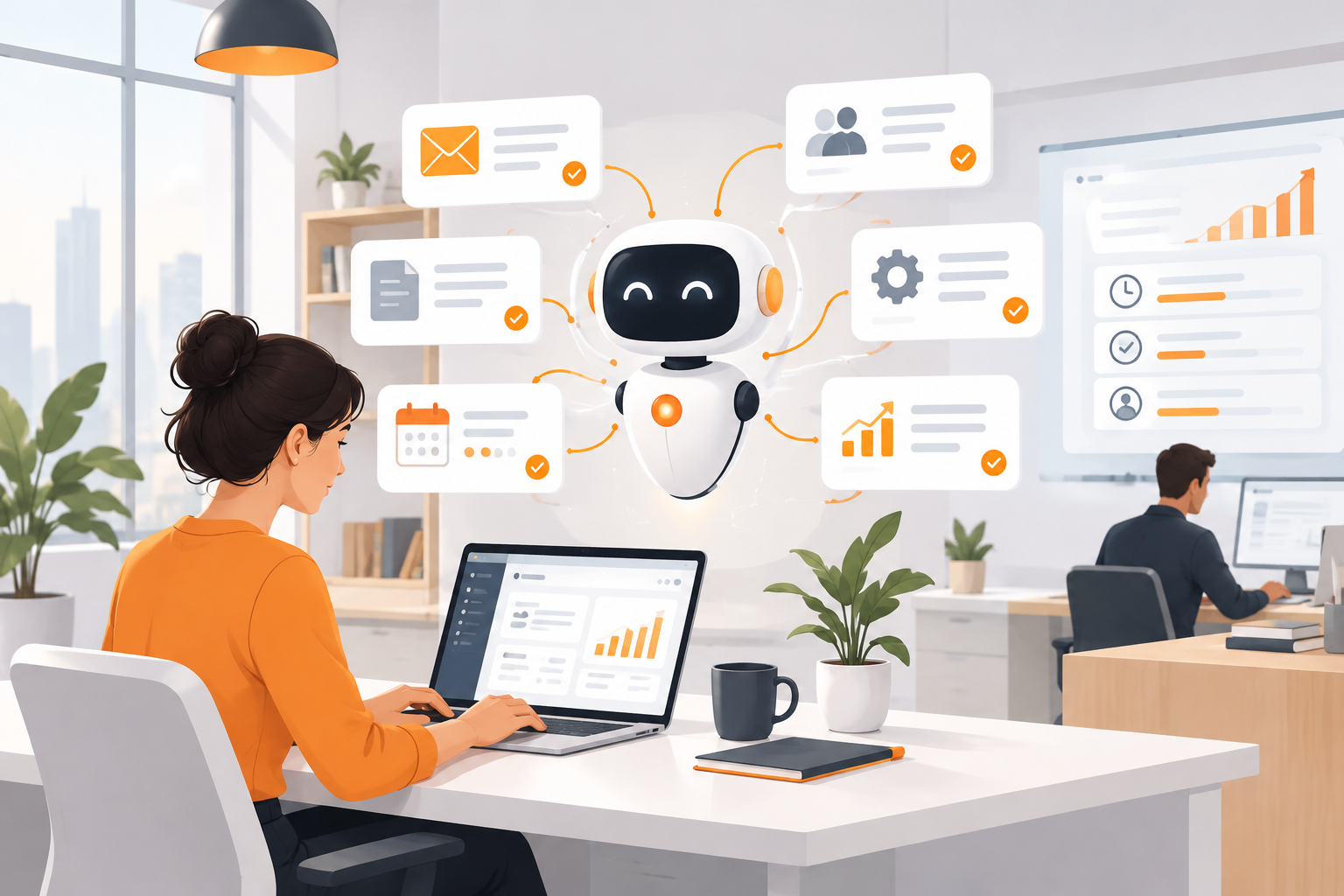
In the rapidly evolving landscape of business automation, SMBs are increasingly looking towards agentic DevOps to streamline operations and reduce overheads. With the recent global rollout of Docusign's AI workflows, there's a treasure trove of insights waiting to be harnessed by businesses aiming to refine their DevOps processes. This blog post explores how SMBs can learn from Docusign's journey to enhance their DevOps with a focus on effective information retrieval and execution, minimizing the need for extensive human oversight.
As the complexity of AI agents grows, the necessity for efficient DevOps strategies becomes more apparent. Docusign's transition from an open beta to a global general availability rollout demonstrates how meticulous planning and strategic execution can lead to successful AI workflow integration.
Background/Context
Docusign has been at the forefront of digital contract management, but their recent foray into AI-driven workflows marks a significant shift in their operational strategy. According to The New Stack, Docusign's AI workflows were designed to integrate seamlessly with existing enterprise software, ensuring that AI agents could not only find the right information but also execute tasks with minimal intervention.
The transition from beta to a global rollout required overcoming numerous challenges, such as ensuring data accuracy, refining AI learning models, and improving system interoperability. These hurdles are not unique to Docusign and present common pain points for SMBs looking to adopt similar technologies.
Main Problem/Challenge
SMBs often face significant challenges when implementing AI workflows within their DevOps processes. One of the primary issues is ensuring that AI systems can retrieve and process the right information without constant human oversight. Docusign's experience highlights the difficulty of integrating AI agents into existing systems without disrupting operations.
For many SMBs, the complexity of AI agents, coupled with the necessity for precise data retrieval, poses a daunting challenge. Missteps in AI integration can lead to data silos, inefficient workflows, and increased operational costs. Additionally, maintaining an optimal balance between AI autonomy and human intervention is critical to avoid over-reliance on manual processes, which can negate the efficiency gains promised by AI.
Solution/Approach
Docusign's approach to solving these challenges provides a roadmap for SMBs aiming to improve their agentic DevOps processes. By employing a phased rollout strategy, Docusign carefully monitored AI performance, allowing them to make data-driven adjustments to their workflows. This ensured that AI agents could effectively retrieve information and execute tasks without excessive human intervention.
Best Practices for SMBs
- Phased Implementation: Start with a limited rollout of AI workflows to monitor performance and make necessary adjustments before a full-scale implementation.
- Focus on Data Quality: Ensure that your AI systems have access to clean, structured data to improve retrieval accuracy and task execution.
- Iterative Learning: Continuously refine AI learning models based on performance data and user feedback to enhance their effectiveness over time.
- Hybrid Oversight: Implement a hybrid model where AI handles routine tasks, while humans focus on strategic decision-making and complex problem-solving.
Coffield.io Connection
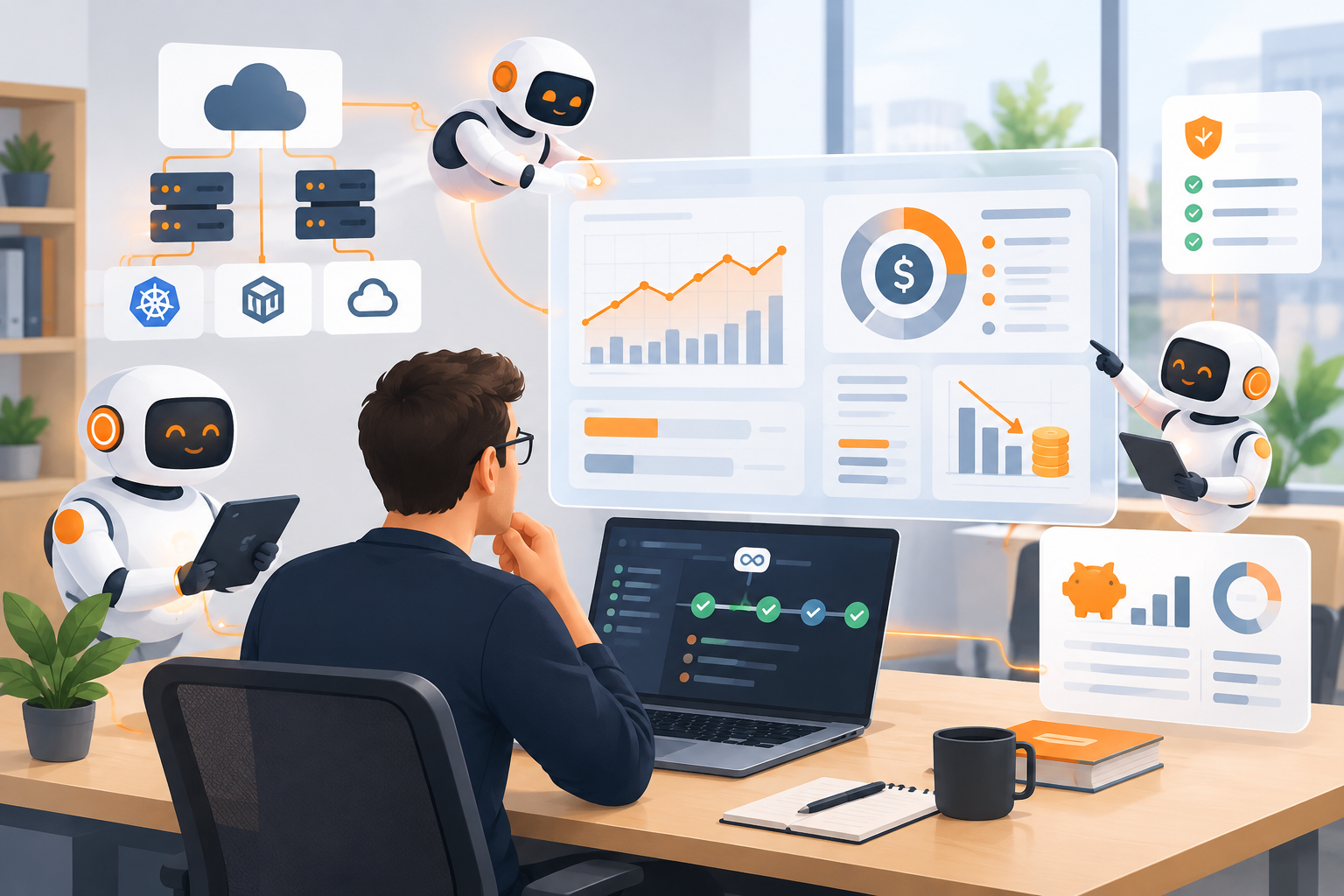
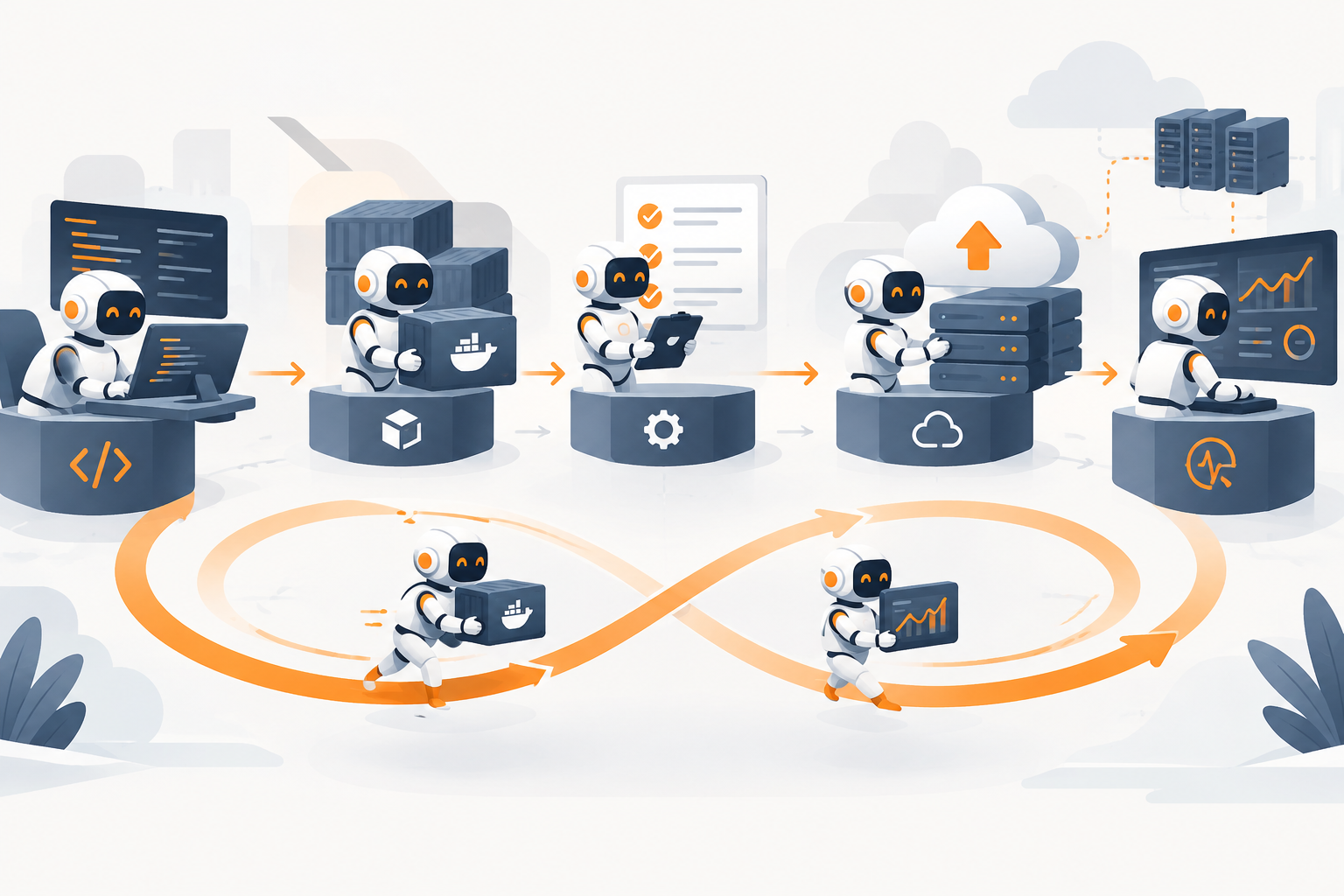
Coffield.io offers a suite of tools designed to help SMBs automate their DevOps processes efficiently. Our platform's agentic DevOps pipelines enable businesses to streamline operations by integrating AI agents seamlessly into their existing systems. With features like LLM token cost reduction and SaaS stack consolidation, Coffield.io ensures that your AI workflows operate at peak efficiency.
Through our custom dashboards, SMBs can gain valuable insights into AI performance, allowing for data-driven decision-making and continuous workflow optimization. By leveraging Coffield.io's solutions, businesses can achieve significant ROI and operational efficiency.
Schedule a Demo today to see how we can transform your DevOps processes.
FAQ Section
What is agentic DevOps?
Agentic DevOps refers to the use of AI agents to automate and optimize DevOps processes. These agents help in managing tasks like code deployment, monitoring, and incident response with minimal human intervention.
How did Docusign manage the transition from beta to global rollout?
Docusign used a phased approach to monitor AI agent performance, making data-driven adjustments to ensure accuracy and efficiency, which is critical for global rollouts.
Can Coffield.io help reduce costs associated with AI implementation?
Yes, Coffield.io's LLM token cost reduction features help SMBs minimize AI-related expenses, allowing for budget-friendly automation.
What are the benefits of integrating AI into DevOps for SMBs?
Integrating AI into DevOps can lead to improved operational efficiency, faster deployment times, and reduced errors, all of which contribute to smoother business operations.
How does Coffield.io support workflow automation?
Coffield.io provides tools that automate routine processes, freeing up human resources for more strategic tasks and enhancing overall business productivity.
Conclusion with CTA
Docusign's successful AI workflow rollout offers valuable insights for SMBs seeking to enhance their DevOps processes. By focusing on efficient information retrieval and minimizing human oversight, businesses can achieve significant operational gains. Coffield.io is poised to support your journey with cutting-edge tools designed to optimize your DevOps pipeline and maximize ROI.
Ready to elevate your operations? Schedule a Demo with us today.