3 Ways AI Can Free Organizations from Legacy Workflows

3 Ways AI Can Free Organizations from Legacy Workflows
Introduction
In today's fast-paced business landscape, many small and medium-sized businesses (SMBs) are realizing the drawbacks of clinging to legacy workflows. These outdated systems often hinder growth, adaptability, and efficiency. As the world recovers and adapts to post-pandemic realities, the urgency to transition away from these antiquated processes has never been higher. Enter Coffield.io's AI-powered automation tools, which are designed specifically to help SMBs optimize their operations, breaking free from the chains of legacy workflows. In this article, we will explore three crucial ways AI can revolutionize outdated processes, enabling SMBs to thrive in a competitive environment.
Background/Context Section
The shift towards AI-driven automation is not a new trend, but its significance has amplified post-pandemic. Businesses worldwide have realized that to remain competitive, they need to adopt technologies that enhance operational efficiency and adapt to rapid changes. According to a report by McKinsey, businesses that leverage AI can increase their cash flow by up to 120% by 2030 (source: McKinsey). Further, the Harvard Business Review highlights how AI can free organizations from legacy workflows by enabling experimentation and adaptation (HBR). These insights indicate a clear shift in industry norms—prioritizing agility and innovation over traditional, rigid systems.
Main Problem/Challenge Section
Legacy workflows present several challenges for SMBs. Firstly, they often entail manual processes that are time-consuming and prone to human error. For instance, traditional inventory management might involve numerous spreadsheets and manual adjustments, leading to inaccuracies and inefficiencies. Secondly, a lack of integration between systems can create silos within an organization, hindering communication and collaboration. For example, finance and sales departments might struggle to share real-time data, causing decision-making delays.
Moreover, legacy systems often lack the flexibility to scale operations efficiently. As SMBs grow, they require systems that can adapt and expand alongside them. For example, a small retail business that relies on outdated inventory software might find it challenging to manage increased SKUs or expand to new platforms. Common pain points include high operational costs, limited visibility into processes, and inadequate data analysis capabilities, all of which can stifle growth and innovation.
Solution/Approach Section
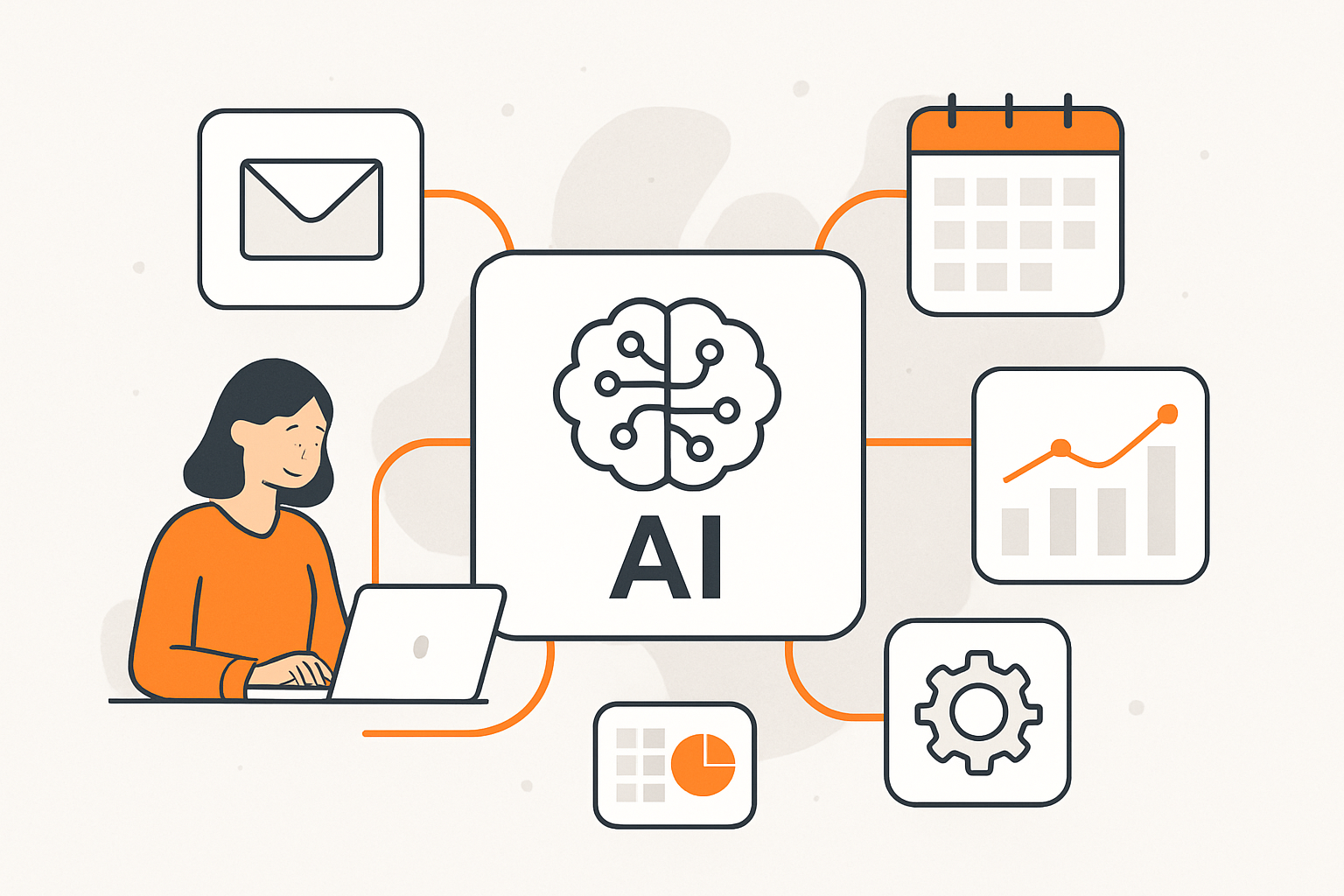
AI-powered automation offers a compelling solution to these challenges. By implementing AI-driven tools, SMBs can streamline processes, enhance data accuracy, and improve scalability. Here’s a step-by-step approach to how AI can transform legacy workflows:
- Automating Routine Tasks: AI can automate repetitive and mundane tasks, such as data entry and inventory updates, reducing errors and freeing up valuable employee time for more strategic activities.
- Integrating Systems for Cohesion: AI facilitates seamless integration between disparate systems, enabling real-time data sharing across departments. This integration fosters better communication and collaboration, leading to more informed decision-making.
- Enhancing Scalability and Flexibility: AI tools are inherently scalable, allowing businesses to easily adjust operations in response to market demands. For example, AI-driven inventory management systems can automatically adjust stock levels based on predictive analytics, mitigating the risk of overstocking or stockouts.
Best practices include starting with a clear assessment of current workflows, identifying processes that can benefit most from automation, and gradually implementing AI tools to ensure a smooth transition and employee buy-in.
Coffield.io Connection
Coffield.io is at the forefront of providing AI-powered solutions that address the specific needs of SMBs. Its features, like QuickBooks sync, custom dashboards, and workflow automation, are pivotal in revolutionizing outdated systems.
- QuickBooks Sync: This feature provides seamless integration with accounting software, ensuring real-time financial data visibility, reducing errors, and enhancing decision-making.
- Custom Dashboards: Coffield.io offers customizable dashboards that provide a comprehensive view of operations, enabling SMBs to track performance metrics and make data-driven decisions.
- Workflow Automation: By automating routine tasks, Coffield.io enables businesses to allocate resources more strategically, enhancing overall efficiency.
- AI Agents: These are designed to facilitate intelligent automation, allowing SMBs to focus on core business activities while minimizing operational complexities.
The real-world application is evident in the case of a small retail business that leveraged Coffield.io's tools to automate its inventory management, resulting in a 30% reduction in operational costs and a 50% improvement in inventory accuracy.
FAQ Section
-
What are legacy workflows, and why are they problematic? Legacy workflows refer to outdated processes and systems that are often manual and lack integration capabilities. They are problematic because they increase operational costs, limit scalability, and hinder efficient data management.
-
How can AI enhance SMB operations? AI enhances SMB operations by automating routine tasks, integrating disparate systems for cohesive data flow, and providing scalable solutions that adapt to business growth.
-
How does Coffield.io support SMBs in transitioning from legacy workflows? Coffield.io provides tools like QuickBooks sync for real-time financial visibility, workflow automation to reduce manual efforts, and AI agents to streamline operations.
-
Is AI implementation cost-effective for SMBs? Yes, AI implementation is cost-effective in the long run. By reducing manual efforts and improving accuracy, businesses can significantly cut down on operational costs and enhance productivity.
Conclusion with CTA
In conclusion, transitioning from legacy workflows to AI-powered operations is crucial for SMBs aiming to stay competitive in today's dynamic market. By leveraging Coffield.io's robust suite of automation tools, businesses can enhance operational efficiency and adaptability. Don't let outdated processes hold you back; embrace the future of efficient operations today. Schedule a Demo to see how Coffield.io can transform your business.